AlbertaNature & scenery
Banff & Lake Louise Day Tour from Calgary
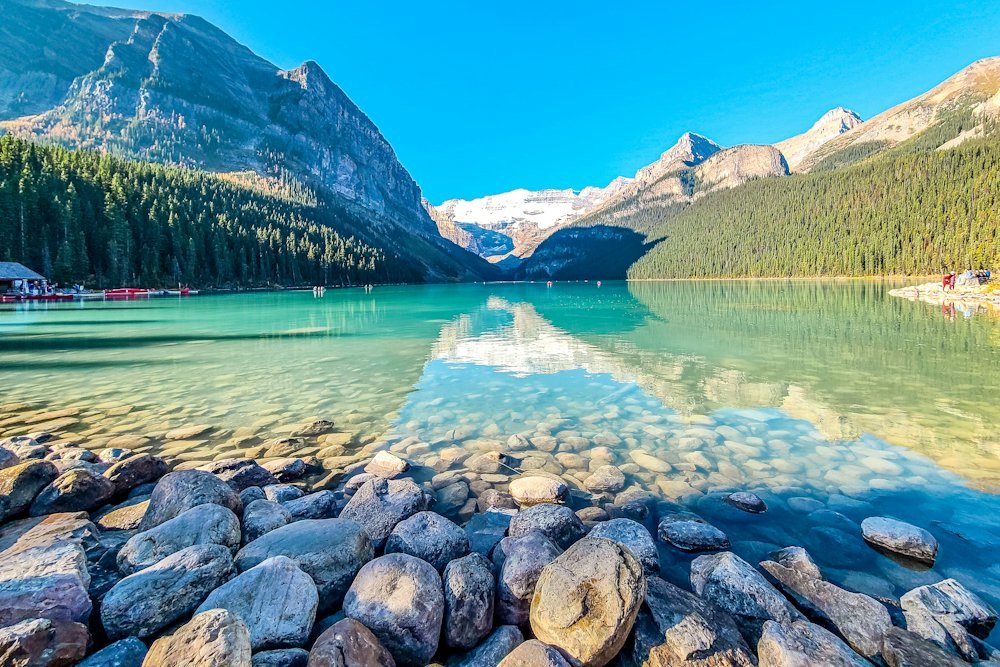
The classic Rockies day trip: Banff town, turquoise lakes and mountain viewpoints.
Many Canadian day tours run in winter, including Banff and Lake Louise, Niagara Falls, Québec City and Yellowknife aurora evenings. Others, such as the Icefields Parkway, the Cabot Trail, whale watching and the Thousand Islands, are mostly seasonal. Expect shorter daylight, slower roads and cold weather, and allow flexible timing.
Canada is a winter country, so plenty of tourism carries on between November and March. City tours, walking tours, food tours and a handful of scenic day trips operate through the cold months, usually with the same local guides who work in summer.
What changes is the menu. Boat cruises, whale watching, most park lake access and long mountain loops are tied to the warm season, while indoor stops, frozen waterfalls, snowy lookouts and evening aurora viewing become the highlights. The tour list on this site shows a season for each trip, and your quote will confirm what is actually operating on your dates.
Operators also tend to run smaller schedules in the coldest months. A tour that departs several times a day in July may leave once a day in January, so flexibility on your start date and time makes it easier to match you with a departure.
These are the trips where winter is not a compromise and can even be the better time to go.
Some trips simply do not operate in winter, or only by special arrangement. Whale watching from Victoria and Tadoussac, the Thousand Islands and Kingston, Algonquin Park, the Cabot Trail, Prince Edward Island, Hopewell Rocks and the Bay of Fundy, and Whitehorse sightseeing are listed as warm-season trips on this site.
The Icefields Parkway is listed as May to October, with winter tours by request only. Yoho National Park is also a warm-season tour. If your travel dates fall between November and April, start with the winter-friendly list and ask in your quote about alternatives rather than hoping a seasonal route will open.
In Banff and Lake Louise, the lakes are frozen and covered in snow, and the mountain views are often at their sharpest on cold, clear days. The Banff sightseeing and Johnston Canyon tour is listed as year-round, and winter ice walks are possible in the canyon. Ask whether traction cleats are provided or recommended, because the paths can be icy.
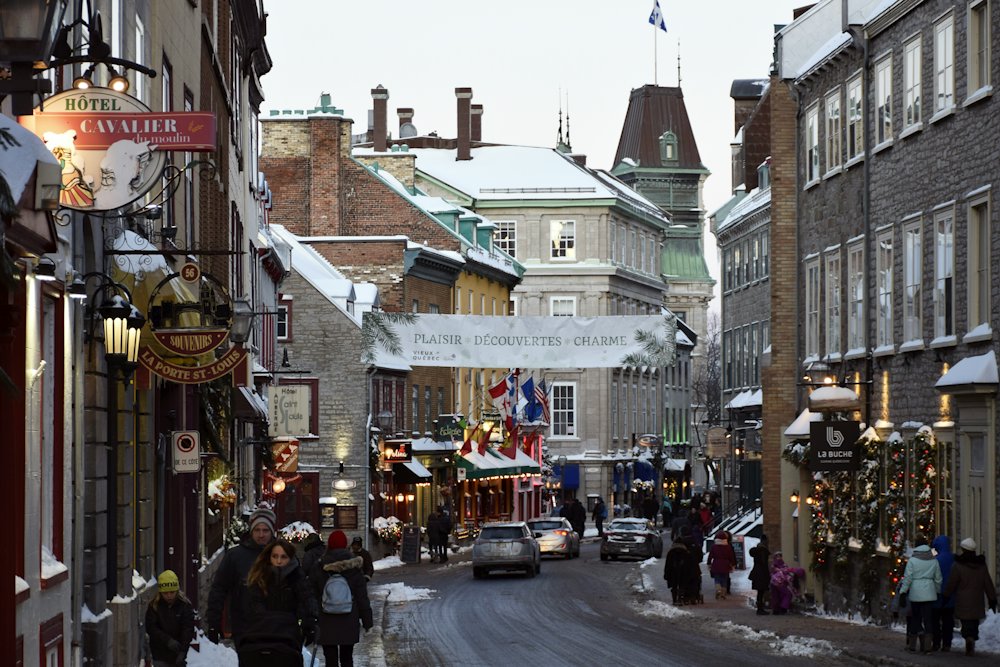
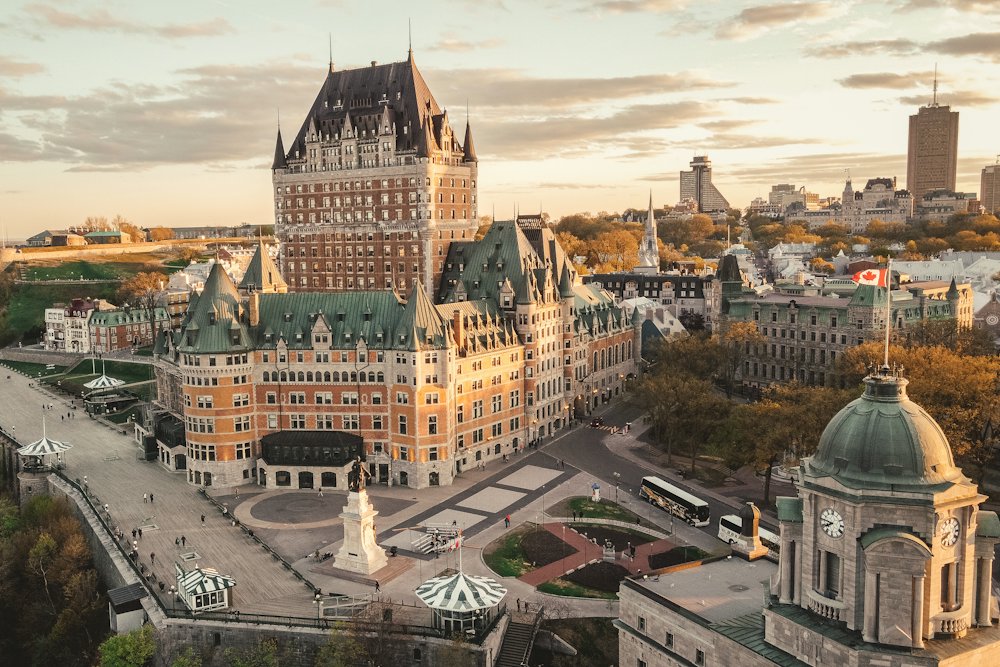
In Québec City, the old walled town is compact and walkable, with stone streets, cafés and shops that make it easy to warm up between outdoor stops. Montmorency Falls and Île d’Orléans are also listed as year-round, though some outdoor attractions have reduced hours.
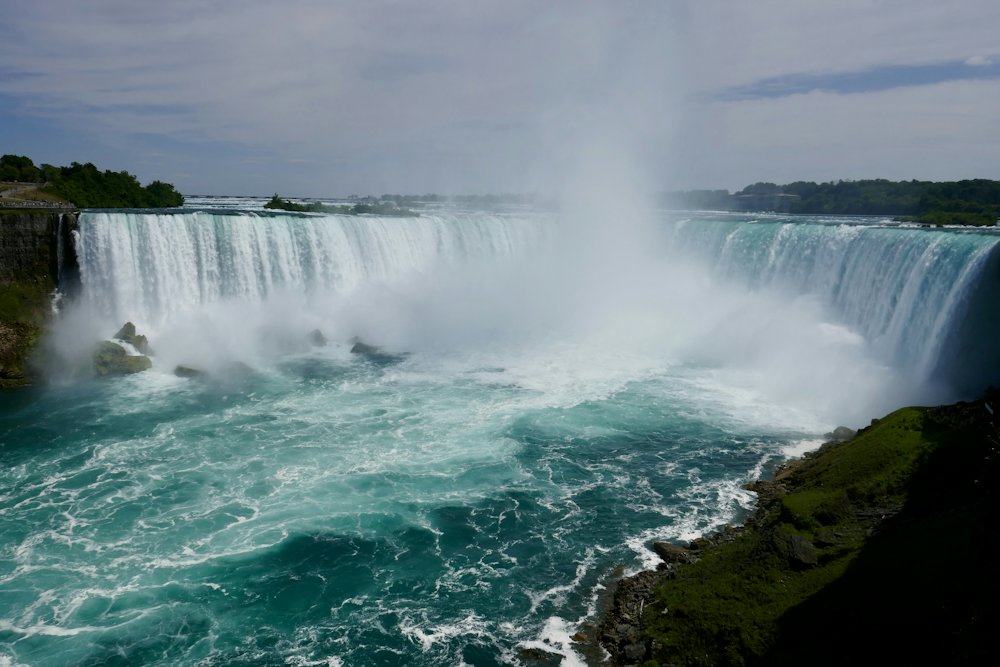
At Niagara Falls, mist freezes on railings and trees near the water, and the falls themselves keep flowing. Boat cruises are generally a warm-season feature, so a winter visit focuses on viewpoints, the parkway and indoor stops.
Mountain highways such as the Sea-to-Sky Highway and the roads around Banff can be snow-covered or icy, and they sometimes close briefly for avalanche control or collisions. Professional drivers use winter tires and know the routes, but nobody controls the weather.
Build slack into any plan with a flight or a fixed evening commitment. Avoid booking a tight connection on the same day as a mountain excursion, and expect the operator to adjust the route, shorten the itinerary or reschedule if conditions are unsafe. That is a normal part of winter touring in Canada, not a sign of poor service.
If you are comparing a tour with a rental car, remember that winter driving on unfamiliar mountain roads is a real skill. A local driver who travels the route daily will usually be calmer and better prepared than a visitor on a first trip, and you can look out of the window instead of at the road.
In December, southern Canadian cities get roughly eight to nine hours of daylight, and the far north gets only a few hours. Sunset can arrive in the late afternoon, so the best light for photographs is earlier than most visitors expect.
Ask whether a full-day tour will have you driving back in the dark, and whether key viewpoints are scheduled while there is still light. A tour that sounds relaxed in summer can feel rushed in winter simply because the usable daylight is shorter.
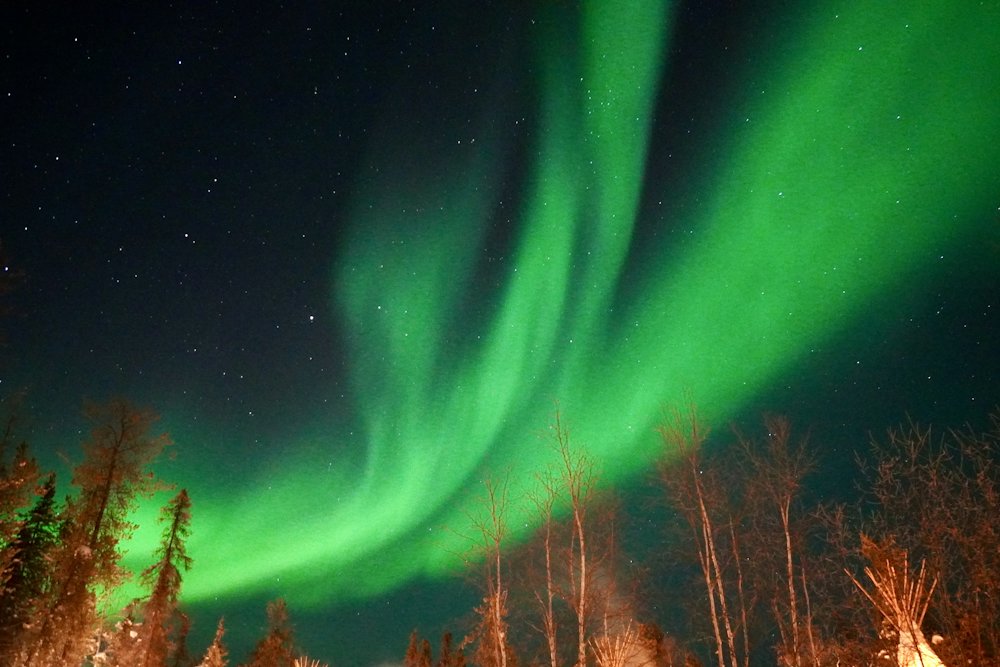
At the far end of the scale, Yellowknife has roughly four to five hours of daylight around the December solstice. That suits aurora viewing, which needs darkness, but it means daytime sightseeing there is limited and indoor options matter. Summer works the opposite way, with very long evenings.
Dress in layers: a thermal base layer, an insulating middle layer such as fleece or wool, and a windproof, waterproof outer shell. Wear warm socks and insulated waterproof boots with good grip, and bring a hat, gloves or mittens and a scarf or neck warmer.
In places like Banff, Québec City and Yellowknife, wind chill matters more than the thermometer reading. Hand warmers are inexpensive and useful, and phones and camera batteries drain faster in the cold, so keep spares in an inside pocket. For aurora evenings, see our Yellowknife guide for fuller advice.
Footwear deserves special care. Boots with a deep tread and a warm lining matter more than almost anything else, because icy ground at lookouts and in old town streets can be treacherous. Remember that buildings, shops and vehicles are well heated, so dress so that you can remove a layer easily when you come indoors.
Some attractions have shortened hours or close for the season, and viewpoints can be hidden by cloud or snowfall. Lakes that look turquoise in July are frozen and white in January, which is beautiful but different from the photographs in most brochures.
Wildlife is harder to predict, and aurora is never guaranteed. Winter also brings last-minute changes, so a small amount of flexibility goes a long way. Travellers who accept this tend to enjoy winter trips very much, and many find fewer crowds a real benefit.
It is also worth knowing what winter cannot offer. You will not see the Icefields Parkway in its summer form, you will not go whale watching from Victoria in January, and a fixed itinerary may be reordered on the day. If a specific stop is essential to you, say so in your request and ask how the operator handles alternatives.
Send your dates, group size, pick-up area and the winter conditions you are comfortable with. Mention whether anyone has mobility needs, because icy sidewalks and long outdoor stops can be harder in winter.
BookTours.ca arranges day tours through independent local operators, replies by email and sends an itemised quote in Canadian dollars, with private and small-group options where available. Ask what happens if weather forces a change, and who to contact on the day.
Yes, many do. City tours, Banff and Lake Louise, Niagara Falls, Québec City and Yellowknife aurora evenings operate in winter. Boat-based and remote scenic routes are mostly seasonal, so check the season shown for each trip.
Professional drivers use winter tires and know the conditions, which is a strong reason to go with a driver-guide. Roads can still close or slow down, so keep your schedule flexible.
Southern Canadian cities have roughly eight to nine hours of daylight in December, and the far north has much less. Ask how the itinerary is timed around sunset.
Layers with a windproof, waterproof outer shell, insulated waterproof boots, a hat, gloves or mittens and a neck warmer. Bring spare phone and camera batteries and keep them warm.
Yellowknife aurora evenings run from mid-August to April. The aurora is a natural event and can never be guaranteed, so plan more than one night if you can.
Tell us your dates and group size and we will email an itemised quote. Free, no obligation, no online payment. Request a quote
AlbertaNature & scenery
The classic Rockies day trip: Banff town, turquoise lakes and mountain viewpoints.
OntarioNature & scenery
Coach or minivan day trip to see Niagara’s waterfalls and nearby sights with a guide.
QuebecHistory & culture
Fortifications, funiculars and centuries of French-Canadian history on foot.
QuebecHistory & culture
Visit North America’s only walled city, a UNESCO World Heritage site, in one day.
Northwest TerritoriesNature & scenery
A guided evening outside the city for the best chance of seeing the aurora.